When you buy through links on our articles, Future and its syndication partners may earn a commission.

Humanity is on its way back to the moon as NASA's Space Launch System (SLS) blasts the space agency's Orion space capsule on April 1. The launch was even captured from space!
What is it?
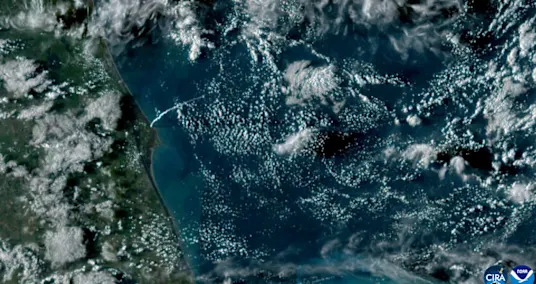
This photo shows NASA's SLS rocket and Orion spacecraft blasting off from the historic Launch Complex 39B at NASA's Kennedy Space Center (KSC) in Florida at 6:35 p.m. EDT (2235 GMT) on Wednesday, April 1.
The launch is represented by a white plume of smoke seen by the GOES-19 weather satellite.
Why is it amazing?
The Artemis 2 mission represents the first time that humans have visited the moon since the Apollo 17 mission back in 1972. Not only this, but during this mission, the four-person crew of Jeremy Hansen, Christina Koch, Reid Wiseman, and Victor Glover will journey farther into space than any other human before them.

The Artemis 2 mission is scheduled to last for around 10 days. Though the crew won't set foot on the lunar surface during this mission, this sets the scene for the future of the Artemis program, particularly Artemis 4 and 5, which will finally return humans to the moon's surface after over half a century.
Follow along with our Artemis 2 mission live updates page for the latest developments.
LATEST POSTS
- 1
 New movies to watch this week: See 'Marty Supreme' in theaters, rent 'Springsteen: Deliver Me from Nowhere,' stream 'Cover-Up' on Netflix
 - 2ONE returns to Red Sea with new service
- 3The Most recent Microsoft Surface Star PC: Ideal for Top of the line Planning and Gaming Needs
- 4How did life begin on Earth? New experiments support 'RNA world' hypothesis
- 5Benihana is 60 years old. Gen Z is lining up.


- Heavenly Pastry Confrontation: Pick Your #1 Sweet Treat!
- Bombardier Global 8000 Enters Service
- Signature Scents: A Manual for Outstanding Fragrances
- Emergency services search for five people last seen in missing Jeep
- Recalled "super greens" supplement linked to dozens of salmonella cases, CDC says
- Stunning new James Webb Space Telescope images reveal 'hidden' stars being born
- When does Spotify Wrapped come out? The music streamer says 'soon.'
- Bavarian leader questions Germany's Eurovision participation
- The Significance of a Land Lawyer for Your Business